CERTIFICATE

 Journal of Political And Legal Sovereignty (JPLS) was officially launched on January 1, 2023, by a group of young academics from PT Keberlanjutan Strategis Indonesia and was made available online on January 31, 2023. Journal of Political And Legal Sovereignty (JPLS) is a double-blind peer-reviewed journal that describes itself as a dynamic platform for collecting and exchanging research and academic collaboration aimed at disseminating rigorous, innovative, and impactful research. Journal of Political And Legal Sovereignty (JPLS) aims to foster communication in the fields of political sovereignty, law, several studies, and reviews on selected disciplines in various branches of Law, Political Science, and International Relations (Sociology of Law, History of Law, Comparative Law, Politics, International Relations, Diplomacy, etc.). In addition, Journal of Political And Legal Sovereignty (JPLS) also covers various research on the branches of Law, Political Science, and International Relations in a broader sense. The intellectual foundation of the Journal of Political and Legal Sovereignty (JPLS) is broadly influenced by critical traditions in law, political sovereignty, and political economy. These have challenged the assumptions, methods, omissions, and commitments of legal and political sovereignty thinking, and political economy, emphasizing the role of institutions, morality, politics, and social or historical contexts in shaping power relations.
| Journal Title | Journal of Political And Legal Sovereignty |
| Accreditation | SINTA 3 by the Ministry of Higher Education, Science and Technology of the Republic of Indonesia |
| DOI | 10.38142/jpls |
| Frequency | The journal will publish four issues per year (January – March, April – June, July – September, October – December) |
| ISSN | Online (2985-6523) | Print (2986-2523) |
| Editor in Chief | I Wayan Kartika Jaya Utama (Universitas Warmadewa, Bali, Indonesia) |
| Partnership | Universitas Warmadewa, Bali, Denpasar, Indonesia |
| Copyright | CC BY-NC |
| Publisher | PT Keberlanjutan Strategis Indonesia |
| Indexing | Evaluation Scopus | Sinta 3 | COPERNICUS | Google Scholar | DIMENSION | GARUDA |
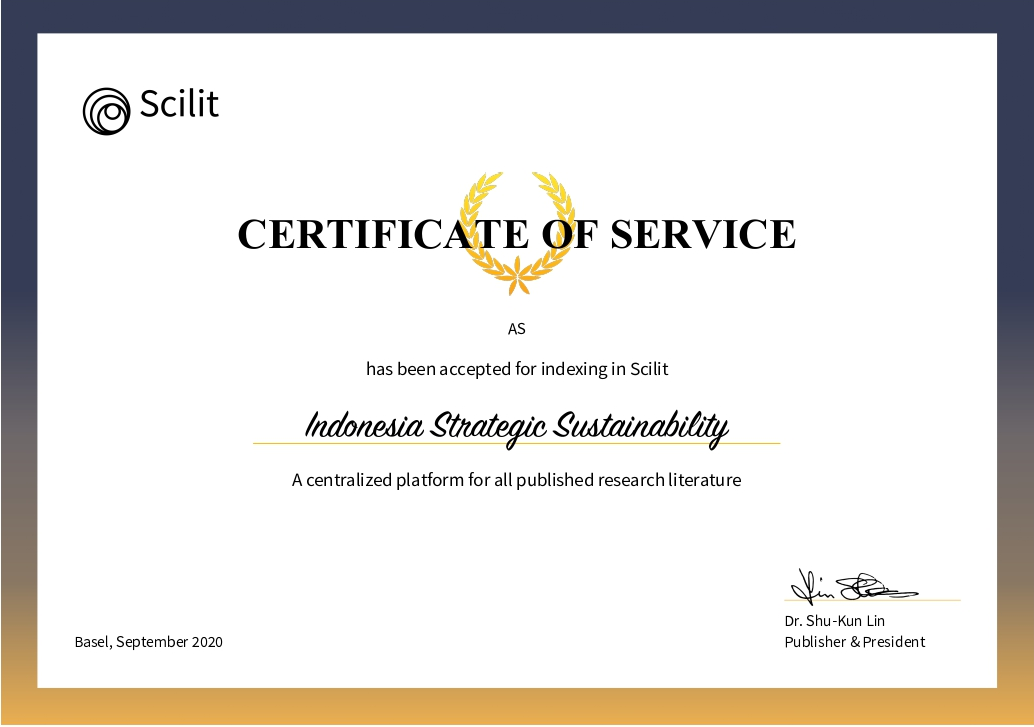
Journal of Political And Legal Sovereignty (abbreviated as JPLS) published by PT Keberlanjutan Strategis Indonesia, p-ISSN 2986-2523 and e-ISSN 2985-6523. The Journal of Political And Legal Sovereignty is has published in four (4) issues per year and published in January – March, April – June, July – September, October – December. Journal of Political And Legal Sovereignty also uses the LOCKSS system to ensure a secure and permanent archive for the journal. Since 2023. Journal of Political And Legal Sovereignty member of CrossRef. Therefore, each article will own a DOI (Digital Object Identifier) number 10.38142/jpls, Web of Science and other indexing, see Abstract and Indexing.
Journal of Political And Legal Sovereignty (JPLS), Decree of the Ministry of Higher Education, Science, and Technology c.q. the Director General of Research and Development Number 355/DST/D.D1/HM.01.01/2026 dated July 28, 2026, which is effective from Volume 1 Nomor 1 Tahun 2023 sampai Volume 5 Nomor 2 Tahun 2027





|

|

|

|
PT Keberlanjutan Strategis Indonesia
Jl. Bedugul No.25, Sidakarya,
Kota Denpasar, Prov Bali 80224