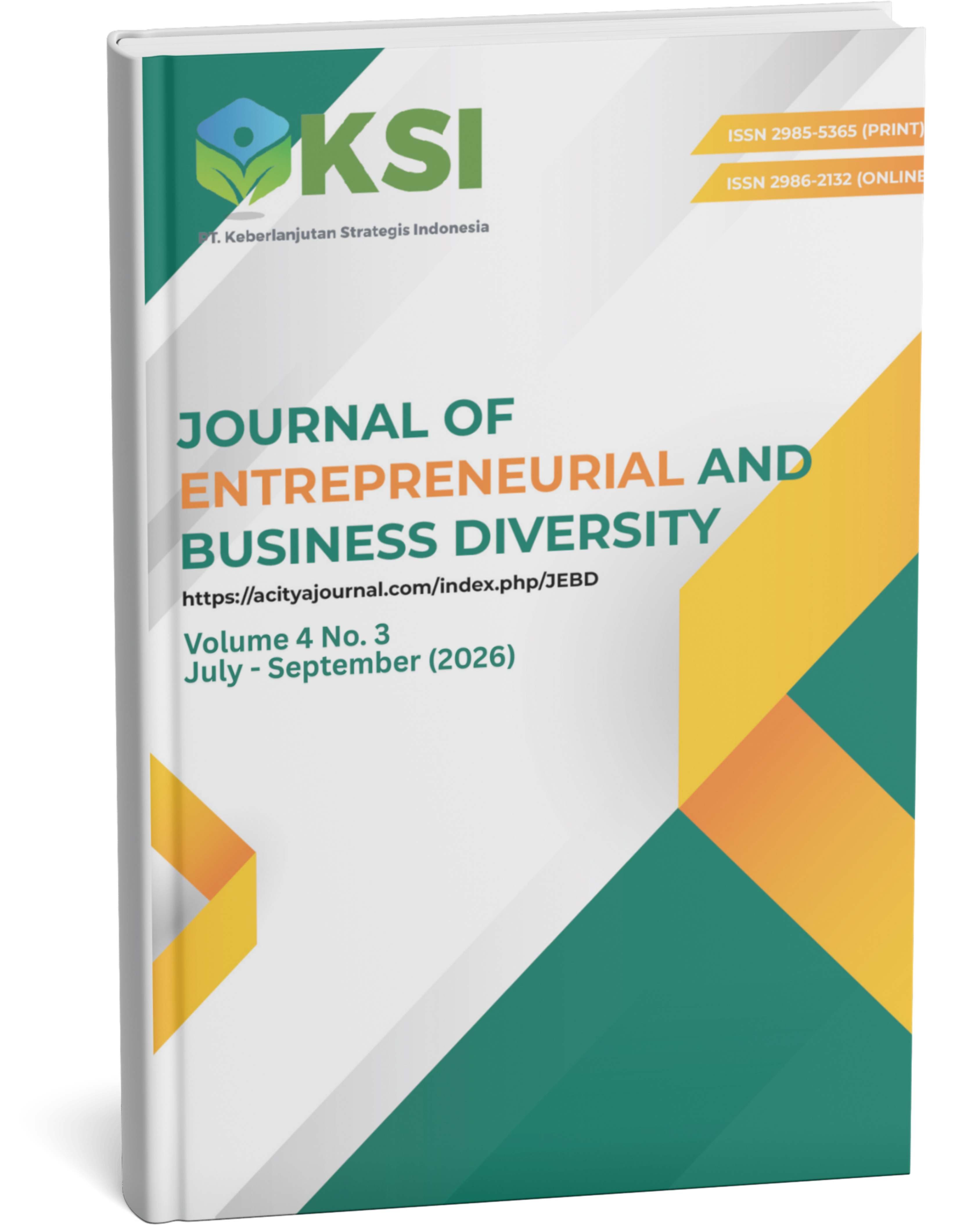
Exploring Gamification in the Work Experience of Generation Z Employees

DOI:
https://doi.org/10.38142/jebd.v4i3.424Keywords:
Gamification, Generation Z, Employee Experience, Digital Workplace, Qualitative Research SDGs, Decent Work, Economic Growth, Industry, Innovation and InfrastructureAbstract
The increasing use of digital technologies in the workplace has encouraged organizations to explore new approaches to creating meaningful employee experiences. One emerging approach is gamification, which incorporates game-related elements into non-game contexts, including workplace activities. This study aims to explore how Generation Z employees experience and interpret gamification in their work environment. A qualitative exploratory approach was employed, with data collected through semi-structured interviews with Generation Z employees who had experience with gamified workplace systems. The data were analyzed using thematic analysis with the assistance of ATLAS.ti. The analysis focused on five initial dimensions of gamification: badges, leaderboards, challenges, social interaction, and progress tracking. The findings indicate that gamification is experienced through several interconnected themes, including digital recognition, achievement and motivation, healthy competition and competitive pressure, social interaction, and progress awareness. The findings further indicate that gamification does not generate a uniform experience among employees. The same gamification element may be perceived positively by some employees while creating pressure or discomfort for others. Thus, gamification should be understood not merely as a technological feature but as part of the broader digital employee experience. The study contributes to the qualitative literature on gamification by emphasizing employees' subjective interpretations and experiences, while also providing practical insights for organizations in designing more meaningful, balanced, and employee-centered gamification systems
Downloads
References
Başar, D. (2024). The relationship between employee experience and employee engagement with the moderating role of positive affect in finance sector. Borsa Istanbul Review, 24(5), 908–915. https://doi.org/10.1016/j.bir.2024.05.002
Capatina, A., Juarez-Varon, D., Micu, A., & Micu, A. E. (2024). Leveling up in corporate training: Unveiling the power of gamification to enhance knowledge retention, knowledge sharing, and job performance. Journal of Innovation & Knowledge, 9(3), 100530. https://doi.org/10.1016/j.jik.2024.100530
Creswell, J. W., & Creswell, J. D. (2018). Research Design: Qualitative, Quantitative, and Mixed Methods Approaches (Fifth). SAGE.
Drummond, M., Cronshaw, S., & Pickles, M. (2026). The academic experience in using gamification to facilitate business and management learning: A UK case study. The International Journal of Management Education, 24(3), 101439. https://doi.org/10.1016/j.ijme.2026.101439
Misara, R., Verma, D., Mishra, S., & Dubey, R. S. (2025). Beyond points and badges: Unveiling the impact of gamification in management studies. Acta Psychologica, 258, 105114. https://doi.org/10.1016/j.actpsy.2025.105114
Mohiya, M. (2026). Unlocking engagement: how employees experience organizational social platforms. Information Technology & People, 39(5), 2088–2106. https://doi.org/10.1108/ITP-05-2025-0611
Moradi, B., Bolisani, E., Kassaneh, T. C., & Cai, F. (2026). Gamification and Knowledge Management: State of the Art and Future Directions. Technology, Knowledge and Learning. https://doi.org/10.1007/s10758-026-09992-5
Mukhsin, M., Renaldo, N., Junaedi, A. T., Veronica, K., & Cecilia, C. (2023). Innovative Approaches to Cloud-Based Accounting Information Systems: Integrating AI, Blockchain, and IoT. Proceeding of International Conference on Business Management and Accounting (ICOBIMA), 2(1), 288–294. https://doi.org/https://doi.org/10.35145/icobima.v2i1.4375
Nyoto, N., Nyoto, R. L. V., & Renaldo, N. (2024). The Bright Side of Artificial Intelligence in Corporate Leadership: A Rapid Literature Review of the Past Five Years. Journal of Applied Business and Technology, 5(3), 193–201. https://doi.org/https://doi.org/10.35145/jabt.v5i3.186
Rafa’i, A., Junaedi, A. T., Nyoto, Renaldo, N., & Sultan, F. M. M. (2023). The Effect of Organizational Commitment and Competence on Work Motivation and Work Performance at SMA Negeri Tapung District. Nexus Synergy: A Business Perspective, 1(1), 1–13. https://firstcierapublisher.com/index.php/nexus/article/view/1
Renaldo, N., Hafni, L., Hocky, A., Suhardjo, & Junaedi, A. T. (2022). The Influence of Digital Technology and Efficiency Strategy on Business Sustainability with Quality Management as Moderating Variables. 2nd International Conference on Business & Social Sciences, 1464.
Renaldo, N., Suyono, Andi, Putri, N. Y., & Cecilia. (2023). How Business Intelligence, Intellectual Capital, and Company Performance Increase Company Value? Leverage as Moderation. Journal of Applied Business and Technology, 4(1), 93–99. https://doi.org/https://doi.org/10.35145/jabt.v4i1.123
Sailer, M., Hense, J. U., Mayr, S. K., & Mandl, H. (2017). How gamification motivates: An experimental study of the effects of specific game design elements on psychological need satisfaction. Computers in Human Behavior, 69, 371–380. https://doi.org/10.1016/j.chb.2016.12.033
Saxena, M., & Mishra, D. K. (2021). Gamification and Gen Z in Higher Education. International Journal of Information and Communication Technology Education, 17(4), 1–22. https://doi.org/10.4018/IJICTE.20211001.oa10
Seppänen, S., Ukko, J., & Saunila, M. (2025). Understanding determinants of digital transformation and digitizing management functions in incumbent SMEs. Digital Business, 5(1), 100106. https://doi.org/10.1016/j.digbus.2025.100106
Ueranant, T., Kritjaroen, T., & Homsombat, W. (2026). Understanding Generation Z employees: The role of motivators, engagement, and performance in organizational success. Heliyon, 12(12), e45168. https://doi.org/10.1016/j.heliyon.2026.e45168
Downloads
Published
Issue
Section
License
Copyright (c) 2026 Nyoto Nyoto, Nicholas Renaldo, Evelyn Wijaya, Rizaldi Putra, Gatot Wijayanto, Rebecca La Volla Nyoto

This work is licensed under a Creative Commons Attribution-NonCommercial 4.0 International License.
Creative Commons Attribution-NonCommercial 4.0 International License.